

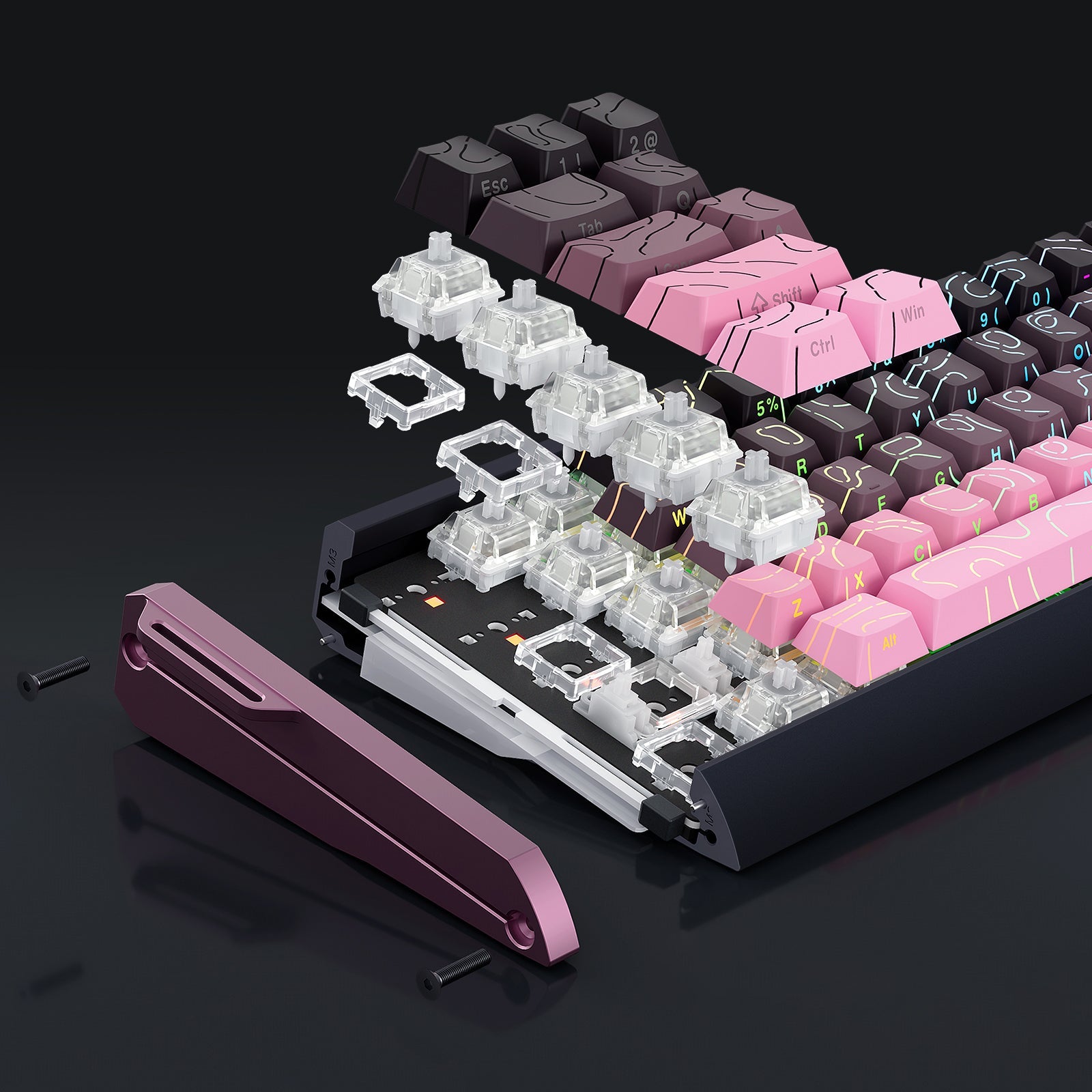
Adjustable actuation is one of the most important innovations in modern mechanical gaming keyboards, especially in magnetic keyboards that use Hall effect switch technology. Unlike traditional mechanical switches that rely on physical metal contact, magnetic keyboards detect keypresses using changes in magnetic fields. This allows for highly precise actuation control, faster response times, and features like rapid trigger and variable actuation points.
This guide explains how adjustable actuation works, how magnetic (Hall effect) keyboards detect pressure, and why this technology is becoming a standard for competitive gaming, fast typing, and high-performance input devices.
What Is Adjustable Actuation?
Adjustable actuation refers to the ability to change the exact distance a key must travel before it registers an input. In traditional mechanical keyboards, this actuation point is fixed based on the physical switch design (for example, 2.0mm actuation in many linear switches).
In magnetic keyboards, the actuation point can be customized through software, often ranging from extremely sensitive (as low as 0.1mm) to deeper presses (up to 3.5–4.0mm depending on the switch design). This gives users full control over how responsive each key feels.
How Magnetic (Hall Effect) Keyboards Work
Magnetic keyboards use Hall effect sensors to detect key movement. Instead of metal contacts touching to complete a circuit, each key switch contains a magnet and a sensor on the PCB (printed circuit board).
When you press a key, the magnet moves closer or farther from the sensor. This changes the magnetic field strength, which the sensor measures in real time. The keyboard firmware then converts this data into keypress input based on the configured actuation point.
This non-contact system eliminates physical debounce delays and wear from metal contacts, resulting in smoother and more consistent key behavior over time.
Key Components in Magnetic Switch Technology
- Magnet: Attached to the stem of the switch, moves as the key is pressed.
- Hall effect sensor: Detects changes in magnetic field strength.
- PCB (Printed Circuit Board): Houses sensors and processes input signals.
- Firmware/software: Allows users to set actuation points and customize behavior.
What Makes Adjustable Actuation Possible?
The key innovation behind adjustable actuation is analog input detection. Unlike traditional digital switches that only detect ON or OFF states, magnetic switches can measure continuous key travel.
This means the keyboard knows exactly how far a key is pressed at any moment. By setting a threshold (for example 1.2mm), the keyboard triggers input when the key crosses that point. Changing the threshold changes the actuation depth without physically modifying the switch.
Rapid Trigger and Why It Matters
One of the most popular features enabled by adjustable actuation is Rapid Trigger. Instead of waiting for a key to fully reset to its original position, rapid trigger allows the key to activate and deactivate dynamically based on movement direction.
This is especially useful in gaming scenarios where fast repeated inputs are required, such as strafing in FPS games or quick skill activation in competitive esports titles.
Benefits of Magnetic Keyboards with Adjustable Actuation
- Customizable sensitivity: Adjust actuation for gaming, typing, or mixed use.
- Faster response times: Near-instant key registration with minimal latency.
- Reduced wear: No physical contact points means less mechanical degradation.
- Improved consistency: Every key press is measured electronically.
- Enhanced gaming performance: Ideal for FPS, rhythm games, and esports.
Adjustable Actuation vs Traditional Mechanical Switches
Traditional mechanical switches rely on a fixed metal contact point. Once pressed beyond a certain distance, the circuit closes and the input is registered. This system is reliable but limited in customization.
Magnetic keyboards, on the other hand, allow continuous measurement of key travel. This enables dynamic actuation adjustment, analog-like behavior, and features such as multiple actuation profiles for different keys.
For example, you can set WASD keys to ultra-sensitive 0.2mm actuation for gaming, while keeping typing keys at 1.5–2.0mm for accuracy.
Who Should Use Magnetic Adjustable Actuation Keyboards?
Magnetic keyboards are ideal for users who want precision and customization:
- Competitive gamers who need fast reaction times
- Esports players requiring consistent input performance
- Users who switch between gaming and typing workflows
- Keyboard enthusiasts interested in advanced switch technology
Final Thoughts
Adjustable actuation in magnetic keyboards represents a major shift in keyboard technology. By using Hall effect sensors and magnetic fields instead of physical contacts, these keyboards offer unmatched customization, speed, and durability.
As gaming and productivity demands increase, magnetic switch keyboards with adjustable actuation and rapid trigger functionality are becoming one of the most advanced input solutions available today.


