

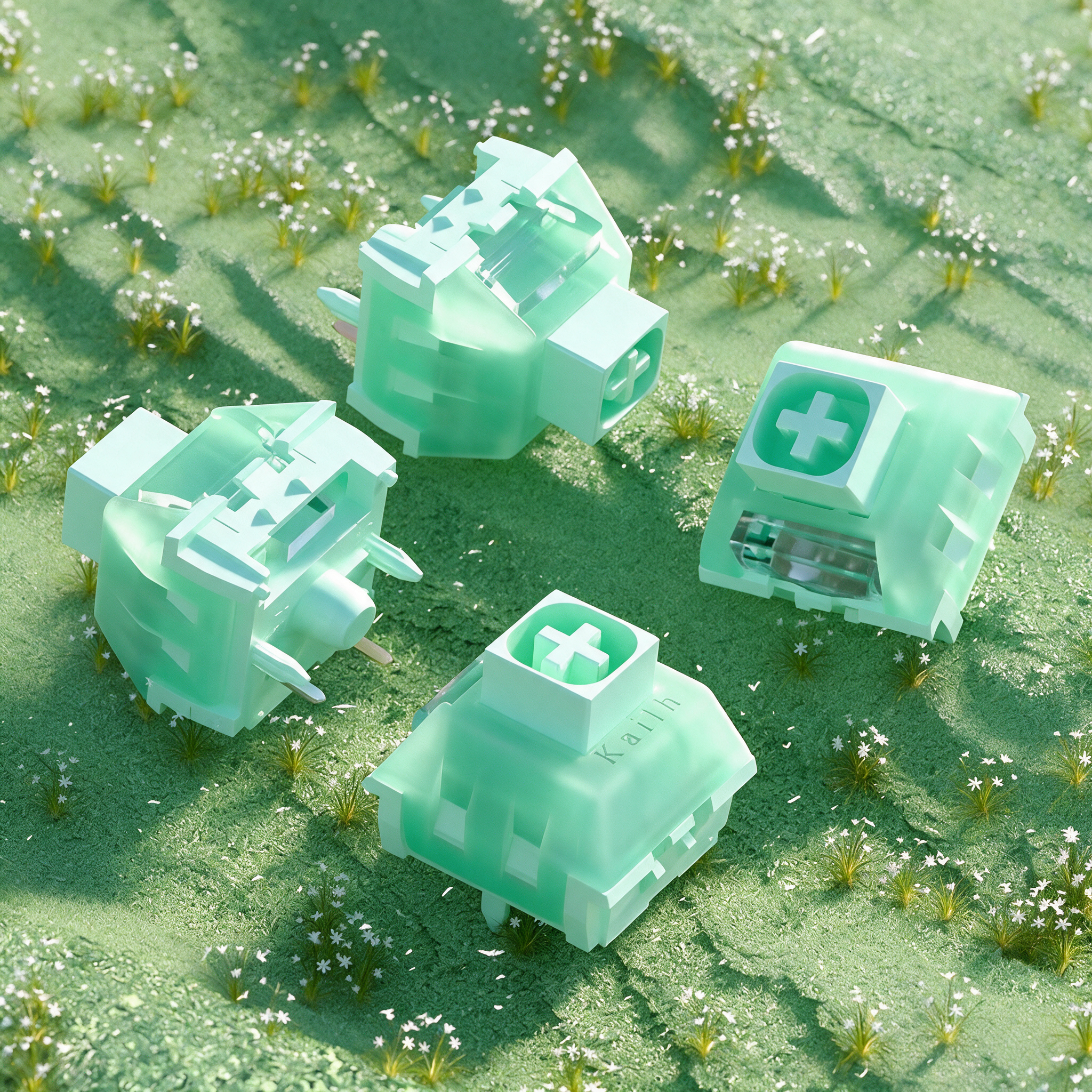
Kailh vs Gateron Switches: The Two Biggest Names in Mechanical Keyboards
If you have spent any time building a custom keyboard or reading switch reviews, you have almost certainly run into the Kailh vs Gateron debate. Both brands sit at the top of the mechanical keyboard switch world, both are Cherry MX compatible, and both offer huge lineups covering linear, tactile, clicky, and silent switches. So how do you actually pick between them?
This complete comparison breaks down the key differences between Kailh switches and Gateron switches in 2026, from build quality and smoothness to sound signature, price, and gaming feel. Whether you are shopping for your first hot-swap keyboard or upgrading an existing build, this guide will help you pick the right brand.
A Quick History of Kailh and Gateron
Kailh (short for Kaihua Electronics) and Gateron (Huizhou Gateron Electronic Technology) are two of the largest mechanical switch manufacturers in China. Both began by producing Cherry MX–style clones and both have since developed proprietary switch families that many enthusiasts prefer over the original Cherry designs.
Today Kailh is best known for the Box switch housing, low-profile Choc switches, and its Speed lineup used in competitive gaming. Gateron is best known for exceptionally smooth linear switches, the popular G Pro series, and premium lines like the Ink and Oil King families. Both are widely used by boutique keyboard brands and both are staples in the enthusiast community.
How Kailh and Gateron Switches Are Built
At a glance, both brands look and behave like classic MX-style mechanical switches. They use a plus-shaped stem that fits standard MX keycaps, use metal leaf contacts to register keypresses, and are available in 3-pin (plate-mount) and 5-pin (PCB-mount) variants. That means you can generally swap Kailh and Gateron switches into the same hot-swap keyboard, provided the socket supports the pin count of the switch.
Where they differ is in the details:
- Housing design: Kailh Box switches surround the stem with a plastic box that helps keep dust and moisture out. Gateron typically uses conventional MX-style housings but has pushed hard on transparent polycarbonate and Ink-blended materials for a specific sound and look.
- Stem materials: Both brands use POM stems on many popular lines. Gateron often leans into POM plus Ink housings for a deeper sound. Kailh mixes POM, POK, and PA (nylon) depending on the model.
- Spring types: Both offer standard, long-spring, and dual-stage springs. Gateron has been especially aggressive with long-spring designs in switches like the North Pole 2.0 and Baby Kangaroo, which help reduce spring ping and produce a more consistent force curve.
Sound Signature: Thocky, Clacky, or Poppy?
Switch sound is where personal taste really takes over, but there are some general trends between the two brands.
Gateron switches are often chosen for a deeper, rounder sound. Linears from the Ink family and the Oil King tend to lean into a thocky sound profile with a lower pitch, especially when paired with PBT keycaps and a well-modded case. The G Pro series produces a cleaner, more balanced sound out of the box, thanks to factory lubing and tight tolerances.
Kailh switches, particularly the Box lineup, are known for a crisper, more percussive character. Box clicky switches such as Box White and Box Jade produce one of the most distinctive click sounds in the hobby, thanks to a click bar mechanism that delivers a click on both press and release. Kailh linears tend to sit a bit higher in pitch than Gateron linears, giving them a snappier feel that some gamers prefer.
If you value a deep, muted, thocky sound, Gateron is usually the safer starting point. If you want bright, tactile clickiness or a poppy, snappy linear, Kailh has a stronger lineup for that character.
Smoothness and Typing Feel
Smoothness is one of the most debated topics in the switch world, and this is where Gateron has built its modern reputation. Most enthusiasts agree that Gateron linears are among the smoothest options available without hand lubing, thanks to tight housing tolerances and generous factory lube. The G Pro 3.0 line is a good example of a switch that feels great essentially out of the bag.
Kailh switches can also be very smooth, but the results are more line-dependent. The Box series is famous for its self-cleaning stem and dust resistance, but some Box variants can feel slightly scratchy compared with a top-tier Gateron linear. On the other hand, Kailh tactiles can offer a much sharper, more pronounced bump than most Gateron tactiles, which is exactly what some typists want.
The short version:
- Want the smoothest possible linear with the least effort? Look at Gateron pre-lubed linear switches.
- Want a firm, defined tactile bump or a distinct click? Look at Kailh, especially the Box tactiles and Box clickies.
- Want dust and moisture resistance? Kailh Box switches are the classic answer.
Gaming Performance: Which Brand Is Better for Gamers?
Both brands are used by competitive gamers, but they lean toward slightly different styles.
Gateron tends to shine in fast-paced games where consistent, smooth actuation matters, such as MOBAs, ARPGs, and rhythm games. Linears like the G Pro 3.0 Red and Yellow families offer light actuation forces around 45–50g and quick reset, which suits rapid key spam.
Kailh has a strong gaming pedigree through the Speed switch category. Kailh Speed switches have shorter travel distances and higher-mounted actuation points, meaning your keypress registers sooner than with a standard MX-style switch. That extra responsiveness is popular for FPS play, though it can also lead to more accidental presses if you rest your fingers heavily.
For pure feel and speed, some gamers now move to magnetic (Hall effect) switches and rapid trigger keyboards. If you are curious how that technology fits into the picture, our Hall effect vs magnetic switches guide is a good next read, along with our overview of rapid trigger technology.
Popular Kailh Switches to Know
Kailh has an enormous lineup, but a few families stand out for keyboard builders in 2026:
- Kailh Box Linear switches like the Box Spring Linear pair a smooth press with the dust-resistant Box housing.
- Kailh Box Clicky switches such as Box Autumn and Box Summer use a click bar for a sharp, well-defined click on press and release.
- Kailh Box Tactile switches such as Box Winter deliver a strong, distinct bump that many typists prefer to softer tactiles.
Browse the full lineup in the Kailh switches collection, or drill down into Kailh linear, Kailh tactile, and Kailh clicky switches.
Popular Gateron Switches to Know
Gateron is arguably the most recognized name in modern mechanical switch design. A few standouts:
- Gateron G Pro 3.0 is the successor to one of the best value pre-lubed switch families around, available in multiple variants and pin configurations. See the Gateron G Pro 3.0 switches.
- Gateron Oil King is a premium linear with an Ink housing and POM stem, prized for its smooth press and deep, muted sound.
- Gateron Baby Kangaroo 2.0 is a tactile favorite with a strong, snappy bump.
- Gateron Magnetic Jade Linear switches bring Gateron design into the Hall effect world, opening up analog features on compatible magnetic keyboards.
Explore more in the Gateron switches collection, or narrow down by feel: Gateron linear, Gateron tactile, and Gateron clicky switches.
Price and Value: Are Kailh or Gateron Switches Cheaper?
Both brands cover a similar price range, though the mix looks a little different.
Gateron has a broad catalog at multiple price points, from affordable pre-lubed switches to premium Ink and Oil King options. That range makes Gateron easy to recommend to beginners as well as veteran builders. Kailh Box switches tend to sit in the mid range, with the added value of the Box housing and consistent build quality.
Rather than picking a winner on price alone, focus on the specific model. A high-end Gateron Ink linear costs more than a basic Kailh Red, but both brands offer excellent budget and premium tiers depending on where you look in the key switches collection.
Compatibility With Your Keyboard
Before buying either brand, double-check what your keyboard actually supports:
- Hot-swap PCBs almost always work with both Kailh and Gateron switches, since both use standard MX pin layouts.
- Pin count matters: 5-pin sockets accept both 3-pin and 5-pin switches, while 3-pin sockets require 3-pin switches. If you want to use a 5-pin switch in a 3-pin socket, you can clip the two extra plastic legs off the bottom of the switch.
- Magnetic (Hall effect) keyboards require magnetic switches specifically. Standard mechanical Kailh or Gateron switches will not work in a Hall effect socket, and vice versa. Our Hall effect vs magnetic keyboards article explains why.
If you are still getting comfortable with switch swaps, our guide on how to replace switches or keycaps safely walks through the process step by step.
Which Brand Should You Choose?
There is no single winner in the Kailh vs Gateron switches comparison, but there is a right answer for most builds. Use this as a quick guide:
- Choose Gateron if you want maximum smoothness on linears, a factory pre-lubed feel, or a deep, thocky sound.
- Choose Kailh if you want strong tactile bumps, distinctive clicky switches, dust and moisture resistance from the Box housing, or a snappier gaming feel.
- Choose both if you are building multiple keyboards. Many enthusiasts run Gateron linears on a productivity board and Kailh Box clickies on a typing board.
Trying a small pack of each is often the best way to decide. You can also read our overview of switch testers to sample switches before committing to a full set.
Frequently Asked Questions
Are Kailh and Gateron switches compatible with the same keycaps?
Yes. Both Kailh and Gateron use the standard MX-style plus-shaped stem, so any keycap set that fits Cherry MX switches will also fit Kailh and Gateron mechanical switches. That includes the vast majority of Cherry, OEM, DSA, XDA, and SA profile keycaps.
Can I mix Kailh and Gateron switches in the same keyboard?
You can, as long as your keyboard is hot-swap and supports the pin count of each switch. Some builders like mixing switches on modifier keys for a different feel, though the sound and typing feel will be inconsistent across the board. If you want a uniform experience, stick to one brand and family per keyboard.
Which brand is better for gaming, Kailh or Gateron?
Both brands are great for gaming, but they lean in different directions. Gateron linears such as the G Pro 3.0 Yellow are popular for MOBAs and general fast-paced titles thanks to their smoothness. Kailh Speed switches and Box linears are popular in FPS titles where a short travel distance and quick reset matter. If you play competitively, a magnetic (Hall effect) keyboard with rapid trigger may outperform either.
Are Kailh Box switches worth the extra cost?
For many people, yes. The Box housing helps protect the stem from dust and moisture, and Box clicky variants offer one of the sharpest, most consistent clicks on the market. If you type in a dusty environment or want maximum click definition, Kailh Box switches are worth a look.
Which is smoother out of the box, Kailh or Gateron?
On average, Gateron linears feel smoother than Kailh linears out of the box thanks to tight tolerances and generous factory lubing. Kailh switches can be very smooth as well, especially after a light hand lube, but if you want the most polished feel with zero effort, Gateron is typically the first pick.
Final Thoughts
The Kailh vs Gateron question is really about matching a switch family to how you use your keyboard. Gateron dominates the smooth linear and thocky sound conversation, while Kailh owns the Box housing and delivers some of the best clickies and tactiles you can buy. Browse the Gateron switches and Kailh switches collections to find a starting point that fits your build and budget.


